


Living Outside: How Property Types Affect Safety and Stability
- Apr 18
- 5 min read
Property Ownership, Eviction Risk, and How to Prepare

People often assume “If I can’t find it, I’m okay”. That’s one of the biggest risk mistakes when living outside. The land being used always belongs to someone else. Who owns that land directly affects how long someone might be able to stay, how quickly they may be forced to move, and whether they will receive any notice of eviction at all.
Understanding property types and ownership helps prepare for displacement and reduces loss. This is not guidance on how to choose where to stay. It is an explanation of how different land ownership systems respond when someone is living on property without permission.
CAMPS ARE TEMPORARY! Even when a spot feels stable, it isn’t. Most unsheltered living situations last a few weeks to six months, and rarely remain stable long-term.
What Triggers Evictions
If the police are frequently showing up in camp in response to calls from the community, consider this an early warning signal.
Across all property types, the same patterns increase risk:
Fire hazards or poor sanitation
Complaints from neighbors (both housed and unhoused)
Domestic violence or conflict
High visibility (being seen often)
Proximity to schools, businesses, or busy roads

City-Owned Property (Medium Risk)
City-owned land belongs to the city government. It does not belong to one person. If the city takes care of it, fixes it, or makes rules about it, the city probably owns it. City land can feel stable temporarily, but evictions often escalate due to public pressure, media attention, or redevelopment timelines.
What it is:
Parks
Empty lots
Land near public buildings
Sidewalks
What happens here:
The city decides whether you can stay
Different city departments may have to agree before anything happens
Police may be asked to give notice or clear the area
The timing can change depending on complaints or political pressure
Note: City-owned land is often situated next to State or privately owned property, which can mean different risks apply in the same area.
State-Owned Property (Medium - High Risk)
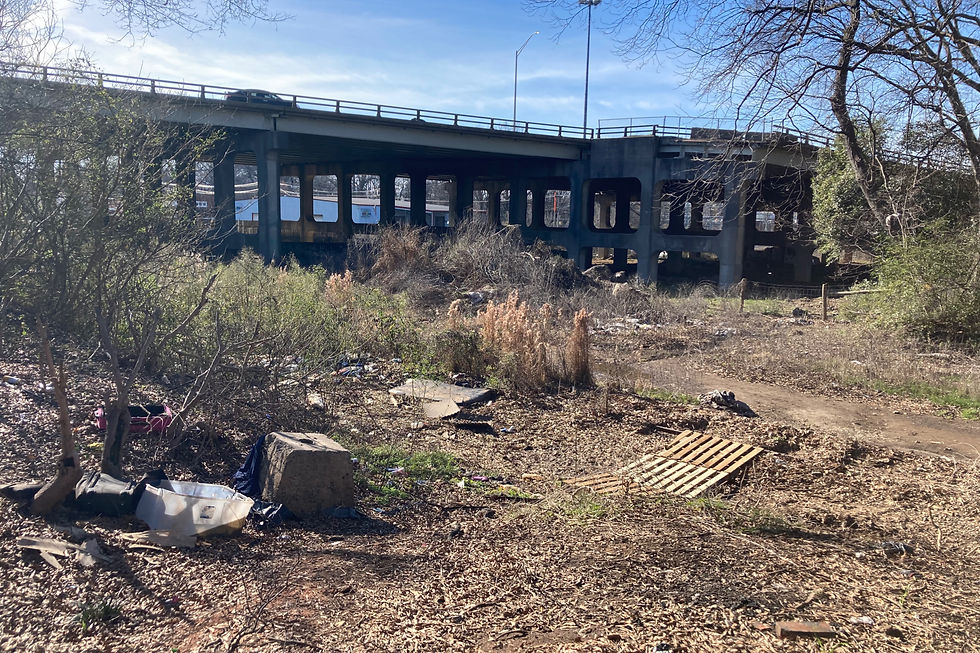
State-owned land belongs to the state government, not the city. Camps near highways or busy roads are often cleared because the state sees them as safety risks. State land is usually less stable than it looks. Evictions can happen quickly, and aggressive measures to prevent return are likely.
What it is:
Areas near highways
Under bridges
Department of Transportation (DOT) land
What happens here:
Decisions are made by people outside of the city or county where you are camping
Safety and visibility are often the main concerns
Note: State-owned land is often situated next to private property, which can mean different risks apply in the same area.

Utility / Railroad Property (High Risk)
Utility land belongs to companies that manage power lines, water systems, gas lines, or railroads. These areas are usually cleared because companies worry about damage, lawsuits, or safety hazards. Utility and railroad land is often one of the least stable places to stay. These areas are often cleared quickly, and efforts are usually made to prevent people from returning.
What it is:
Land under power lines
Areas around substations
Railroad tracks
Pipeline corridors
What happens here:
The utility company is focused on safety and fire risk
Police or private security will be involved
Railroad police are NOT city police. They work for private railroad companies and focus on protecting tracks, trains, and company property, often enforcing laws specifically related to rail safety and trespassing.
Note: Railroad companies generally control land 50 to 100 feet out from the tracks on both sides, but this varies. Beyond that distance, the land may belong to someone else, which can mean different risks apply in the same area.

Private Property (Medium to High Risk)
Private property belongs to a person or a company. Stability depends entirely on whether the owner knows and how they respond.
What it is:
Vacant commercial lots
Abandoned buildings
Undeveloped land
What happens here:
The owner decides what happens
If the owner does not know you are there, the camp may stay longer
Once the owner becomes aware, eviction can happen quickly

Using Property Search Tools to Identify Property Ownership
Understanding how to look up property ownership can help you identify who controls the land and better weigh potential risk. Most areas have a public website that shows who owns land and how it is classified. This is often called a property search, parcel lookup, or assessor website. These tools allow anyone to look up land ownership using a map or an address.
Step 1: Find the Website
Search online for:
“[Your county] property search”
or, “[Your county] assessor”
Look for an official government website.
Step 2: Search for the Location
Type in an address if you know it
Use the map and zoom into the area
Step 3: Select the Property
Click on the land or parcel and a record will appear. This record may include:
Owner name
Property type
Land use classification
The owner’s name can help you understand the type of property:
City name = City-owned land
State agency or DOT = State-owned land
Railroad or utility company = Utility or railroad property
Individual or business name = Private property
Map-Based Clues
Maps are a tool to help you understand patterns. Certain words, shapes, and features can help you identify who may own or manage the land. Even when exact ownership information is not available, understanding what kind of land you are looking at can help you anticipate potential risk.
City-Owned Land
“Park,” “City Park,” or “Recreation Area”
Large open green areas
State or Department of Transportation (DOT)
Land near large roads, highways, or interstates
Utility or Railroad Property
“Railway” or rail line labels
Long, straight corridors (often tracks or utility paths)
Power lines, substations, or utility buildings
Private Property
Areas with buildings
Clearly defined boundaries or lots

Survival Tips
Paying attention to patterns and preparing in advance are the most effective ways to reduce loss.
Always assume you may need to move quickly, even if a location feels stable.
Always have your next location in mind
Keep important documents in one place
Keep medications easy to access
Prepare a small “priority bag” with essential items
Take photos of any posted eviction notices
Notice signs of redevelopment, construction planning, new barriers, fencing, or large machinery
Not all property ownership is easy to identify. If ownership is unclear, do NOT assume the land is safe. Some properties are managed by agencies or companies that may act quickly, and enforcement can occur without clear warning or signage. Ownership is not always visible, but enforcement patterns still apply.
For more information about tent evictions, CLICK HERE.
© 2026 homeless.edu. All rights reserved.
No part of this article may be reproduced, distributed, or transmitted without prior written permission.

Comments